Sleep-Informed Support in Schools: What BCBAs Can Do When Bedtime Happens Somewhere Else
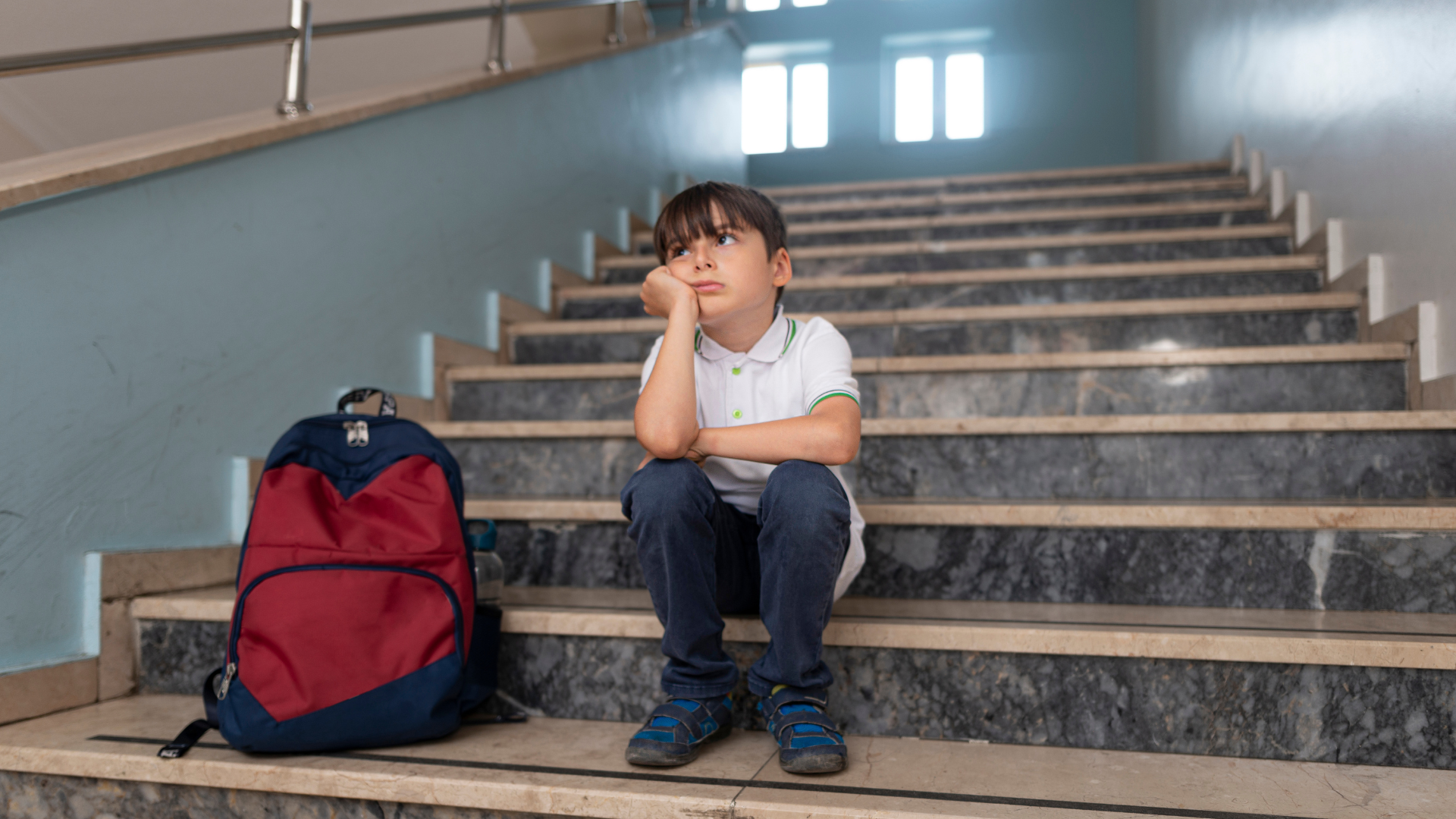
As more BCBAs work in schools, we need to consider a more practical conversation about sleep.
Not a conversation about running bedtime programs in classrooms. Not a conversation that assumes daily caregiver coaching is available. And not a conversation that treats every school problem as though it began and ended at school.
I mean a conversation about what sleep-informed school support actually looks like when services have to fit real classroom conditions: limited caregiver contact, teachers who need behavior support to be feasible and discreet, and interventions that must happen during the school day.
That is a different clinical task.
And it is an important one, because sleep problems in autistic children are common, often persistent, and closely linked to daytime behavior, mood, cognition, and school performance. Reviews continue to cite sleep disturbance rates in autistic children in the 40–80% range, with impacts extending far beyond the night.
Schools Are Not Sleep Clinics… but They Are Observation Goldmines
One of the biggest mistakes we can make is assuming that if a sleep problem happens at home, the school team has no role.
Schools may not be the setting where bedtime changes are implemented, but they are often the setting where the consequences of poor sleep become most visible. Daytime sleepiness, slow task initiation, variable attention, lower frustration tolerance, and increased behavioral dysregulation often show up clearly in classroom routines, especially during transitions, independent work, and less preferred academic tasks. Research on sleep in autism consistently links sleep disruption with daytime behavioral and emotional difficulties, as well as poorer cognitive functioning and school-related performance.
That makes schools incredibly useful places to notice patterns.
Not to diagnose sleep disorders. Not to overinterpret every difficult day. But to ask a better clinical question: Could sleep be changing this student’s readiness to learn?
A School-Based BCBA’s Role Is Often Indirect but Still Powerful
In school models, the BCBA’s role is often less about direct bedtime intervention and more about making daytime supports match biological reality.
If a learner is arriving under-rested, then instructional demands, transition expectations, sensory load, and reinforcement schedules may all need to be adjusted temporarily or systematically. A tired student may need more predictability, shorter task sequences, lower-arousal transitions, or a better-protected pathway into learning before the team starts escalating demands in the name of IEP compliance.
This is where BCBAs can bring real value. We are trained to assess patterns, identify setting events, and modify environments so success is more likely. Poor sleep is often one of those setting events. When we ignore it, we may unintentionally design school-day plans that are too effortful, too stimulating, or too disconnected from what the learner can reasonably access in that moment.
What Sleep-Informed School Support Can Actually Look Like
This does not have to be complicated.
A sleep-informed school plan may include shifting the most demanding tasks to times of day when the learner is more available, reducing response effort during vulnerable periods, increasing access to lower-stimulation regulation supports, or tightening the predictability of transitions. It may mean distinguishing between “won’t do” and “can’t do right now.” It may mean helping teachers see that a student who presents as argumentative or combative at 8:15 a.m. after a poor night may actually be showing the school-day version of sleep disruption.
It may also mean documenting patterns more carefully. Does the student’s hardest behavior cluster on Mondays? After breaks? In the first hour of the day? Late afternoon? Does classroom tolerance drop after just a few small demands are placed? These are the kinds of observations that help a team decide whether the current issue is purely instructional, purely behavioral, or mostly a sleep-readiness problem. Research outside autism also supports the link between children’s sleep and classroom behavior and later academic outcomes, which makes this a meaningful educational issue, not just a home issue.
Better Questions Can Open Better Collaboration
In school-based work, we often do not have long caregiver meetings or intensive in-home support. That is real. But limited access is not the same as no access.
Sometimes the most useful move is a simple, well-targeted question for caregivers. Sometimes it is a brief sleep-related data point shared with a teacher. Sometimes it is a pattern the BCBA notices that nobody else has had the time to connect. When school teams can say, “We’re noticing more dysregulation after nights with poor sleep” or “Mornings appear significantly harder when bedtime was delayed,” the conversation becomes more collaborative and less blaming.
That matters for families.
Because families of autistic learners often normalize sleep disruption after living with it for so long, they may not realize that what the classroom is seeing could be connected to sleep, and the classroom may not realize how deeply the family has adapted around the problem.
This Is a Real Growth Area for School-Based BCBAs
I do think this is becoming a hotter topic, and for good reason.
The school model is asking BCBAs to solve complex daytime behavior problems in highly constrained environments. If sleep is one of the most powerful variables affecting regulation, learning, and classroom functioning, then school-based providers need a framework for recognizing it and responding appropriately.
Not with generic “sleep hygiene” handouts alone. Not with overly broad assumptions. And not by pretending the only meaningful sleep work happens at bedtime.
Sometimes the most valuable thing a school-based BCBA can do is help a team stop treating a sleep problem like a behavior problem.
That is not small. That is often the difference between a plan that escalates tension and one that actually supports the learner.
Ready to Build Sleep Expertise That Works Across Home, Clinic, and School?
If you want to deepen your ability to identify sleep-related barriers and build practical, ethical sleep support that fits real service models, The Sleep Collective is now enrolling for the July cohort.
The program is designed specifically for BCBAs who want structured training in non-medical sleep support, including how to assess sleep variables, collaborate across systems, and design sustainable plans that improve outcomes without stepping outside scope.
Spots for July are limited. If you are ready to bring sleep into clearer clinical focus, whether you work in homes, clinics, or schools, now is a great time to learn more.