The Sleep Story Most Trackers Miss: Why BCBAs Need More Than a Bedtime Log

A family can faithfully complete a sleep log for two weeks and still leave their BCBA without the information needed to understand what is happening.
That is a frustrating possibility for a measurement-driven field, but it occurs more often than it should. The problem is not always poor caregiver follow-through or incomplete records. Sometimes the tracker itself begins with the wrong question, captures the wrong part of the sleep story, or asks families to document details that create more burden than clinical clarity.
When sleep tracking is designed well, however, it can change the direction of an assessment before a behavior analyst writes a single intervention. It can bring patterns into focus, help families see progress they may otherwise overlook, and expose connections between the day and night that are nearly impossible to recognize from memory alone.
The difference lies in what we ask families to track, where the record begins, and how we explain its purpose.
The Tracker Should Belong to the Family
One of the first mistakes BCBAs make is asking caregivers to “collect data.”
To a behavior analyst, that request sounds routine. To a caregiver who is already losing sleep, managing services, and supporting a child through difficult nights, it can sound like another assignment being added to an already full plate.
It also subtly communicates that the information is being collected for us.
When tracking feels like a favor for the treatment team, adherence tends to diminish quickly. Families may begin with good intentions, then miss a night, forget a detail, or stop completing the record because the value of the task is not clear to them.
A sleep tracker should serve the family first.
It gives caregivers a way to notice the small shifts occurring in front of them. It can help them see that sleep is beginning to change even before the final goal has been reached. It creates a record of the effort they are investing and the progress their child is making.
That is a very different experience from completing paperwork for a clinician.
The language matters here. A sleep tracker, diary, or journal feels connected to the family’s experience. It belongs to them. The BCBA is invited into the information so the family and clinical team can make thoughtful decisions together.
Most Sleep Trackers Begin Too Late
Another common mistake is beginning the record at bedtime.
Bedtime may be the moment a family identifies as the problem, but it is rarely where the sleep story begins. By the time a learner enters bed, the biological and behavioral conditions influencing sleep have been developing for the entire day.
A conventional bedtime log may document the evening routine, the time a child enters bed, and what happens overnight. That information can be useful, but it provides only a partial picture. It may tell us what happened after sleep was offered without showing us why sleep was more or less available in the first place.
A meaningful sleep record needs to account for the learner’s full daily rhythm.
That includes what happened before bedtime became a concern. It creates context for the learner’s biological readiness for sleep, the family’s expectations, and the behavioral patterns that emerge when those two things do not align.
This shift in perspective is often where the first important clue appears.
A family may believe its child suddenly developed a bedtime behavior problem. The broader record may suggest that the night is responding predictably to something that changed much earlier. Without that context, a BCBA can easily direct treatment toward the most visible behavior while overlooking the variable with the greatest influence.
More Information Is Not Always Better Information
Behavior Analysts love data, but sleep tracking is one area where more detail does not automatically produce better clinical information.
Caregivers should not have to become overnight research assistants. Asking someone to record exact times, count every disruption, or reconstruct a complicated sequence at two o’clock in the morning creates an unreasonable response effort. It may also produce a level of precision that the collection conditions cannot support.
The best sleep tracker is not the one with the most boxes. It is the one a family can complete consistently and accurately enough to reveal meaningful patterns.
This requires restraint on the part of the BCBA.
Every item on the tracker should have a clear purpose. If the information will not influence assessment, guide a decision, or help the family recognize change, it may not need to be collected. A simpler record completed consistently will usually tell us more than an elaborate one that is abandoned after three difficult nights.
The family’s capacity is part of the measurement system. Ignoring it compromises the very information we hoped to obtain.
What Might the Right Tracker Reveal?
A useful tracker can show that the time a family calls “bedtime” and the time sleep actually begins are telling two different stories. It can reveal whether the learner’s sleep pattern is stable or shifting across days. It can help place challenging behavior within the larger sleep context instead of treating it as an isolated event.
It can also make gradual improvement visible.
Families living through difficult sleep often evaluate progress one night at a time. A hard night can make it feel as though nothing is changing, even when the overall pattern is moving in the right direction. A written record creates enough distance to see what memory and exhaustion tend to blur.
And there is much, much more a thoughtfully designed tracker can reveal.
Some of the most useful insights are not the details caregivers initially assume will matter. They emerge when the information is organized in a way that allows the BCBA to see relationships across the whole sleep system.
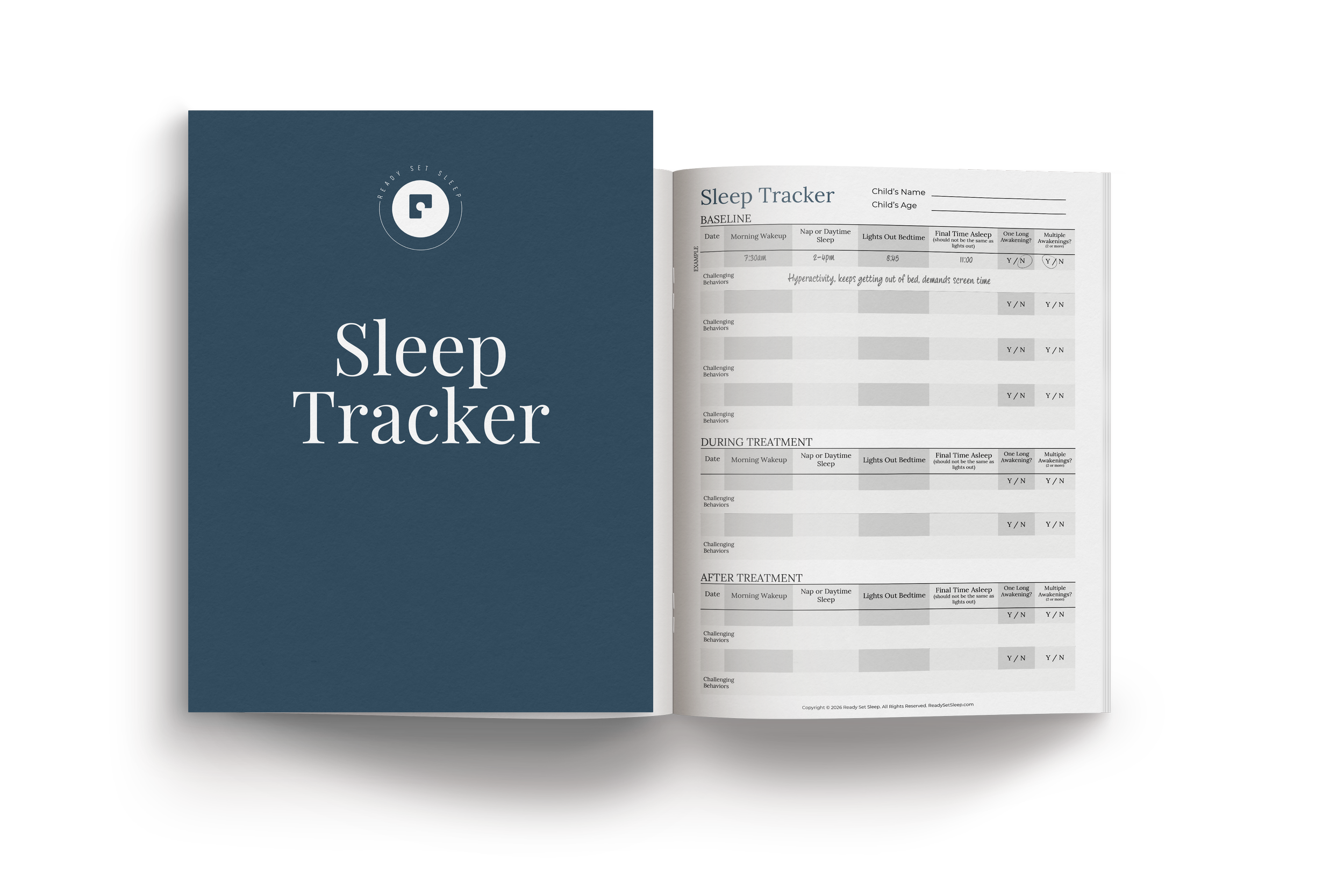
I am deliberately not unpacking every part of the Ready Set Sleep Tracker here. The value is in putting it to work, looking at the record differently, and seeing what begins to emerge.
You may be surprised by what it shows you.
The Tracker Is the Beginning, Not the Answer
A sleep tracker does not interpret itself. It does not diagnose a sleep disorder, identify a single cause, or automatically produce an intervention.
What it does is help a BCBA ask better questions.
It may reveal a pattern that deserves closer behavioral assessment. It may point toward a conversation the family and treatment team have not yet had. It may identify a concern that should be discussed with a physician or another qualified provider. It may also show that a small change is already working, even though the family has not reached its final goal.
This distinction is important because the same visible sleep complaint can emerge under very different conditions. The tracker gives us context, but clinical competence is still required to understand what that context means.
That is where sleep science and behavior analysis must work together.
A well-designed record moves us away from reacting to the loudest nighttime symptom and toward understanding the system surrounding it. It gives the family and Behavior Analyst a shared place to begin, grounded in the learner’s actual pattern rather than assumptions or fragmented recollections.
A Better Starting Point for BCBAs and Families
Sleep tracking should not feel like a nightly research project. It should feel manageable, useful, and connected to a purpose the family understands.
When caregivers know why they are tracking, what the information can help them see, and how it will guide decisions that matter to their household, the process becomes collaborative. The tracker is no longer one more task being completed for the BCBA. It becomes a tool the family can use to understand its own progress.
For Behavior Analysts, that creates a far stronger foundation for assessment.
Before we build the plan, we need to make sure we are looking at the right story.
Get Instant Access to the Free Ready Set Sleep Tracker
I created the Ready Set Sleep Tracker to give BCBAs and the families they serve a simpler, more revealing way to begin documenting sleep.
Join the Ready Set Sleep Inner Circle and receive instant access to the free tracker. You will also be the first to know when Ready Set Sleep: A Behavior Analyst’s Guide to Ethical, Effective Sleep Treatment officially launches.
And this is only the beginning. Inner Circle members will receive more exclusive resources, bonus content, behind-the-scenes updates, giveaways, and launch surprises in the months ahead.